The Beijing and Shanghai details below are dated examples reviewed on 17 August 2026, not a promise for every city.
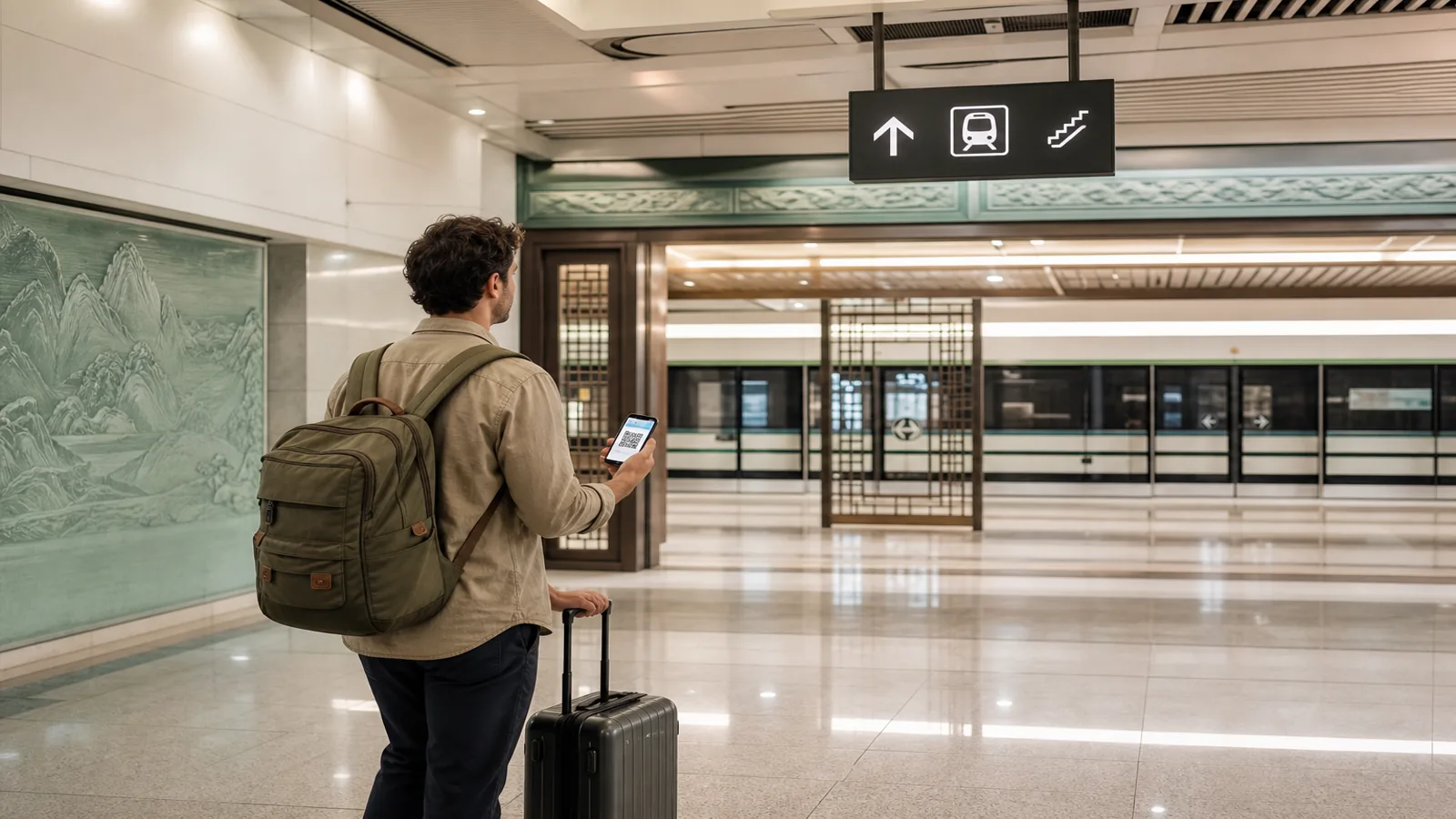
A repeatable Alipay path is Transport → confirm or select City → choose the applicable metro service → complete identity activation → display the operator-supported metro QR. Menus may move after an app update.
Metro and bus products or codes can be different. A code activated for one city or mode is not a nationwide pass, so confirm the city and operator name before the gate.
- Open Alipay and choose Transport.
- Confirm or change City to the place where you will ride.
- Choose that operator’s metro service, not its bus product.
- Complete the identity and payment activation shown in the live flow.
- Open the metro QR at the gate and check that it belongs to the current city.
Default to one rider per ticket, code or transit credential. Do not assume one phone can swipe several companions through the same gate.
Each companion and child must follow the current local operator rule. If another traveler cannot activate a code, buy that person a separate ticket before entering.
- Keep each rider’s entry and exit on the same ticket or product.
- Ask staff how a child should be ticketed before opening the gate.
- Do not pass a phone or card back across a gate unless staff directs you.
If the QR, network, identity check or foreign-card payment fails, use a staffed counter or vending machine for a single-journey ticket. Carry a small amount of RMB cash for machines or counters that accept it.
Take a screenshot of the error before closing the app, but do not block the gate while troubleshooting. Move aside, keep the group together and ask station staff which option works there.
- Show the destination station in Chinese if pronunciation is difficult.
- Keep the paper or token ticket until the exit gate opens.
- If a card appears charged, check the transaction before trying again.
- Use a staffed lane when the entry and exit records do not match.
Beijing’s official example starts core urban rail at RMB 3 for up to 6 km; Capital Airport Express is RMB 25. Separate official guidance says certain overseas Visa and Mastercard cards support tap entry, but confirm the card and gate signage on the day.
Shanghai’s official example starts the metro at RMB 3 below 6 km and lists tap-to-ride, international-card POS terminals, plus local app and pass options. It does not make the same payment promise for another city.
Fares, accepted cards and product menus are time-sensitive. Recheck the local operator page and station signage rather than treating either city example as a national rule.
- Look for the exact supported-card logo at the gate or ticket machine.
- Keep a second payment method even when foreign-card support is advertised.
- Check airport-express fares separately from the core network.
- Use the live fare map for long rides and special lines.
Pass security, then match the line, direction and terminus before choosing a platform. A transfer can involve a long walk even when the map shows one interchange.
Check the last train before an evening trip. For luggage or accessibility needs, allow time to find the elevator; an accessible route may be longer than the nearest stairs.
- Check the terminus printed beside your direction.
- Watch platform displays for short-turn or branch services.
- Leave extra time for a long transfer corridor.
- Keep luggage clear of doors and busy escalator lanes.
- Follow elevator signs rather than assuming every exit is step-free.
- At night, keep a taxi or ride-hailing fallback after the last train.
A large station can have exits on opposite sides of a road, block or railway line. Before boarding, save the destination name and the recommended exit number or letter from a current map or the venue. Recheck the exit directory after leaving the train because construction and closures can change the best route.
When meeting another person, agree on the city, station and exit—not only the station name. If the exit is closed, stay inside the paid area or at a staffed point long enough to send the replacement meeting place clearly.
- Save “station + exit number/letter” in the local language.
- Check lift or step-free access when luggage or mobility makes it important.
- Use the station directory or ask staff before walking through the wrong exit.
If you board in the wrong direction, get off at the next safe station and follow signs or ask staff before crossing to the other platform. If you use the wrong exit, use the station map rather than trying to re-enter on the same ticket.
For an unreadable QR, blocked gate or missing exit record, move to a staffed lane. Show the ticket, app record and destination, then follow the local operator’s correction process.
- Step away from the gate so other riders can pass.
- Check the city, transport mode and entry record in the app.
- Show staff the ticket or code and the station you need.
- Buy a separate single ticket if the digital product cannot be repaired.
- For a late-night or luggage-heavy failure, leave by the staffed exit and switch to an official taxi rank or planned ride.
Metro guidance was rechecked against current Beijing, Shanghai and State Council pages; local operator signs and live payment screens take priority.
Source and review
Last reviewed:
- State Council: 2025 guide for foreign travelers in China
- Beijing government: subway fares
- Beijing government: 2026 five-network tap-to-ride update
- Beijing government: current transport card and Alipay code procedures
- Shanghai government: current metro payment and ticket guide
- Shanghai government: all-network international-card tap-to-ride rollout
- Shanghai government: current child fare guidance by transport type
- Beijing MTR: prohibited items for rail transit
- Beijing MTR: current ticket use and child fare rules
A China-based planner reads every request.