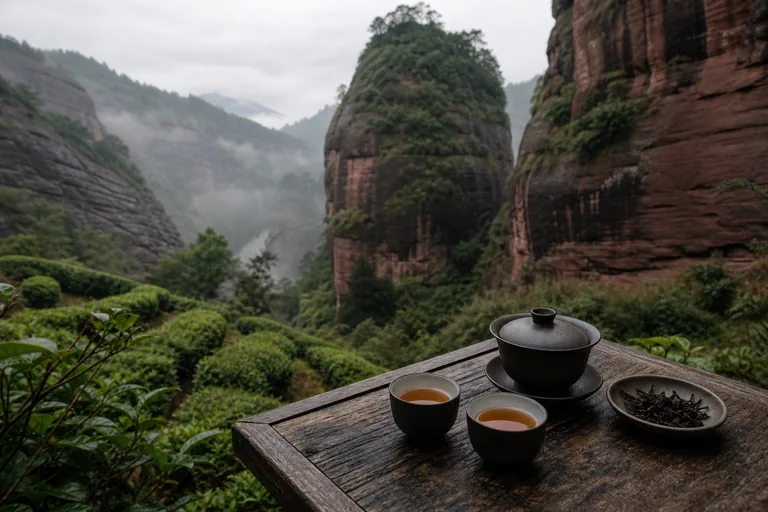
For most first-time international visitors, three days are enough to connect Wuyishan's UNESCO landscape with Wuyi rock tea and Da Hong Pao culture without rushing either one. Use this as a planning frame, then confirm live craft, transport, and protected-area arrangements for your dates.
- Recommended stay — 3 days, with a fourth day for long hikes, photography, or producer-level study.
- Best for — first-time international visitors who enjoy tea culture, slow travel, and landscape context.
- Day 1 — arrival, area orientation, and a low-pressure comparative tasting.
- Day 2 — one protected scenic-area route with weather margin.
- Day 3 — the Da Hong Pao corridor, a verified craft session, tea-road history, or a second slower landscape window.
- Season — tasting is possible year-round; picking and active processing must be confirmed for your dates.
- Language — independent sightseeing is possible, but bilingual support adds the most value for craft and provenance questions.
Mount Wuyi is not only a tea backdrop. UNESCO recognizes a cultural and natural landscape shaped by the Nine-Bend River, red sandstone cliffs, biodiversity, archaeological sites, temples, and the history of Neo-Confucianism. A useful itinerary therefore starts with a choice: spend most of the time in the protected landscape, go deep on tea craft, or give each one a protected day.
The balanced version suits curious first-time visitors who enjoy slow cultural travel and can accept that a good tasting may be more meaningful than a checklist of famous tea names. It is less suitable for a one-day dash, a guaranteed harvest workshop, or anyone expecting every producer and guide to work in English without advance arrangement.
- Choose one primary tea question: terroir, processing, brewing, or buying.
- Protect one landscape day rather than treating the mountain as scenery between shops.
- Ask what will be demonstrated live on your dates before paying for a workshop.
- Keep tea purchases optional and separate from the experience fee.
Wuyi rock tea is a family of oolong teas tied to place, cultivar, processing, and roast—not a single flavor or one luxury label. Fujian's public information describes the craft as a multi-stage process that includes withering, shaking, oxidation control, rolling, and roasting. UNESCO's broader tea-craft inscription also emphasizes that planting, picking, processing, drinking, and sharing are connected social practices, not only products on a shelf.
Da Hong Pao is the most famous name, but fame is not proof of origin or quality. Fujian's geographical-indication explainer says the six protected mother trees have not been picked since 2006. A credible tasting should therefore help you compare teas and explain provenance without implying that ordinary retail tea came from those trees.
- Ask for the cultivar name and growing area in plain language.
- Ask whether the roast is recent, rested, lighter, or deeper—and taste before deciding what you prefer.
- Compare at least two teas side by side instead of chasing one prestige label.
- Treat origin, age, award, and ‘mother tree’ claims as claims that need evidence.
Wuyi rock tea is a semi-oxidized oolong. The introductory Wuyishan tea source notes that the classic green-leaf-and-red-edge appearance can become less obvious after roasting, so a dark, plain-looking leaf does not tell a first-time visitor very much on its own. Follow the tea across infusions instead: notice aroma, roast, the weight and smoothness of the liquor, returning sweetness, and how long the finish stays.
Yan yun (岩韵), often rendered as ‘rock rhyme’, is local tasting vocabulary for the integrated character associated with Wuyi rock tea. Wuyishan National Park's explanation records several interpretations and emphasizes a substantial, smooth liquor, clear and lasting aroma, quick returning sweetness, and a persistent finish. Treat the term as an invitation to compare sensations, not as an authenticity certificate. Ask the host what they mean by it and which part you can smell or taste in the cup.
Tea culture is also about company. UNESCO describes tea drinking and sharing as a way to welcome guests and build relationships. Small cups and repeated infusions slow the exchange down: smell before sipping, compare one round with the next, and let the host explain the tea. You do not need to identify a single ‘correct’ flavor to take part respectfully.
- Smell the dry leaf, lid or cup, and liquor separately, then revisit the same clues after each infusion.
- Ask the host to keep the leaf amount, water, and brewing time consistent when comparing teas.
- Compare Da Hong Pao, Rou Gui, or Shui Xian as different references—not as a fixed best-to-worst ladder.
- Use words you genuinely perceive, and ask for an explanation when a tasting term feels abstract.
A Wuyishan tasting is not a test of refinement. Repeated infusions create a small discipline of attention: notice one aroma, wait for the liquor to change, listen before judging, and accept that the same leaves will not taste identical each time. Some travelers may experience that rhythm as calming, but the value described here is attentiveness and reflection—not medical treatment.
Sharing tea also changes the relationship between host and guest. The host offers time, water, craft knowledge, and explanation; the guest responds with curiosity, patience, and respect. This is one practical way to understand the Chinese idea often expressed as xiūshēn yǎngxìng (修身养性): cultivating one's disposition through ordinary habits. It does not mean that drinking tea automatically improves character.
International visitors do not need to imitate a formal ceremony or perform expertise. Bring familiar beverage memories as a point of comparison, but leave room for Wuyishan's own words and the host-led rhythm. Resemblance can open curiosity; it does not make different traditions interchangeable.
- Give each of the first three infusions one quiet question: what changed in aroma, texture, or finish?
- Let the host finish an explanation before deciding whether you like the tea.
- Share what the cup reminds you of without treating your comparison as a translation of local tradition.
- If the rhythm feels calming, describe that as your experience—not a health promise made by the tea.
A year-round tea tasting, a walk among tea plots, spring picking, active primary processing, and charcoal roasting are different products. They do not automatically happen together. Public reporting places the main picking period from April into the following weeks, but weather, cultivar, elevation, and producer schedules still determine what can be observed in a specific year.
Ask the host to name the exact live activity. If fresh leaves are not being processed, a thoughtful session can still compare finished teas, explain tools and stages, show an inactive workspace honestly, and connect the cup to the landscape. That is more useful than a staged demonstration presented as current production.
- Confirm whether the visit is tasting, field walking, picking, processing, roasting, or a recorded explanation.
- Confirm the host, language, group size, transport, accessibility, and cancellation terms.
- Ask whether photography is permitted before entering a working space.
- Do not enter protected plots, pick leaves, or handle equipment without the host's permission.
Wuyishan has air and rail access, but current routes, station choices, ticket rules, and last-mile transfers should be checked for the exact itinerary. Fujian's official transport page places Wuyishan Airport between the urban area and the scenic area; rail travelers should use China Railway's official English service and verify the station name against their accommodation before paying.
Inside and around the protected landscape, weather and visitor controls can change the order of a day. Save addresses in Chinese, keep the first afternoon light, and verify current scenic tickets, shuttle arrangements, river reservations, and weather warnings through the responsible operator or official service. A screenshot from an old guide is not an operating notice.
- Match the exact airport or rail station to the hotel before booking.
- Keep passport details consistent across rail and attraction reservations.
- Save the hotel, meeting point, and return destination in Chinese.
- Avoid making a non-refundable tea appointment immediately after arrival.
The most useful souvenir is a record of what you learned: tea name, cultivar if known, stated origin, roast style, brewing ratio, water temperature, flavor notes, seller claims, and what you personally observed. That makes later comparisons possible and reduces the pressure to decide everything in one room.
Local Lens China can help turn these choices into a route, prepare a bilingual experience brief, and check the practical handoffs. It cannot certify a tea's origin, guarantee access to a producer, promise live processing, or replace current ticket and transport confirmation.
- Photograph labels and receipts only with permission.
- Write down seller claims separately from verified facts.
- Taste with food and water available, and pace the number of infusions to your own caffeine tolerance.
- Choose a smaller amount you understand over a prestige purchase you cannot evaluate.
Questions before you go
Are three days enough for a Wuyishan rock tea trip?
Three days can support one landscape day, one tea-focused day, and realistic arrival time. Add a day for longer hikes, photography, or producer-level study.
Can I see tea picking and processing all year?
No. Picking, primary processing, resting, and roasting follow different seasonal and producer schedules. Confirm the exact live activity for your dates before booking.
Is every Da Hong Pao tasting tea from the famous mother trees?
No. Fujian's geographical-indication information states that the six protected mother trees have not been picked since 2006. Ask for the actual cultivar, growing area, and producer information instead of relying on a prestige phrase.
Do I need an English-speaking guide?
You can enjoy the landscape independently, but a confirmed bilingual host or interpreter adds significant value when the goal is to understand processing, provenance, and tasting language.
Should I buy tea during the first tasting?
There is no need to decide immediately. Use the first tasting to learn the categories, compare styles, record details, and set a budget before making a purchase.
What does yan yun, or ‘rock rhyme’, mean?
It is Wuyishan tasting vocabulary for the combined impression of aroma, body, smoothness, returning sweetness, and a lasting finish associated with rock tea. Interpretations vary, so use it to guide a comparison across infusions—not as proof of origin or authenticity.
How this page is reviewed
This planning guide is maintained by our China-based team. Date-sensitive details are cross-checked against the official sources shown and must be rechecked for your dates. This page is not a booking confirmation.
Last substantive review: .
Community discussions behind these tips
These public discussions show recurring traveler questions and personal experiences. Claims, recommendations, prices, schedules, and availability are not independently verified.
- Reddit r/tea — Wuyishan tea and travel (community discussion)
- Reddit r/tea — Wuyishan tea sourcing stories (community discussion)
Community experiences are not official or guaranteed guidance. Recheck date-sensitive details with the relevant official source.
Check current official information
Opening arrangements, ticket rules, transport availability, and weather can change. Recheck the sources below for your dates.
- UNESCO World Heritage Centre — Mount Wuyi
- UNESCO Intangible Cultural Heritage — Traditional tea processing techniques and associated social practices in China
- Fujian Provincial People's Government — Wuyi rock tea (Da Hong Pao) craftsmanship
- Fujian Foreign Affairs Office — Three geographical-indication tea products of Mount Wuyi
- Fujian Provincial People's Government — Wuyishan Airport
- Fujian Provincial People's Government — Xiamei village and the ancient tea road
- China Railway 12306 — English FAQ
- China Meteorological Administration — current weather services
- The State Council of China — official 2026 public holiday calendar
- Wuyishan Tea — introductory Wuyi rock tea overview (legacy source, last modified 2020)
- Wuyishan National Park — interpreting yan yun in Wuyi rock tea
- China national standards platform — DB35/T 1545-2015 Wuyi rock tea brewing and tasting
Recheck date-sensitive arrangements directly with the relevant official source before you travel.
Share your dates, group, and the parts of Wuyishan you want help with. A person reviews every request.