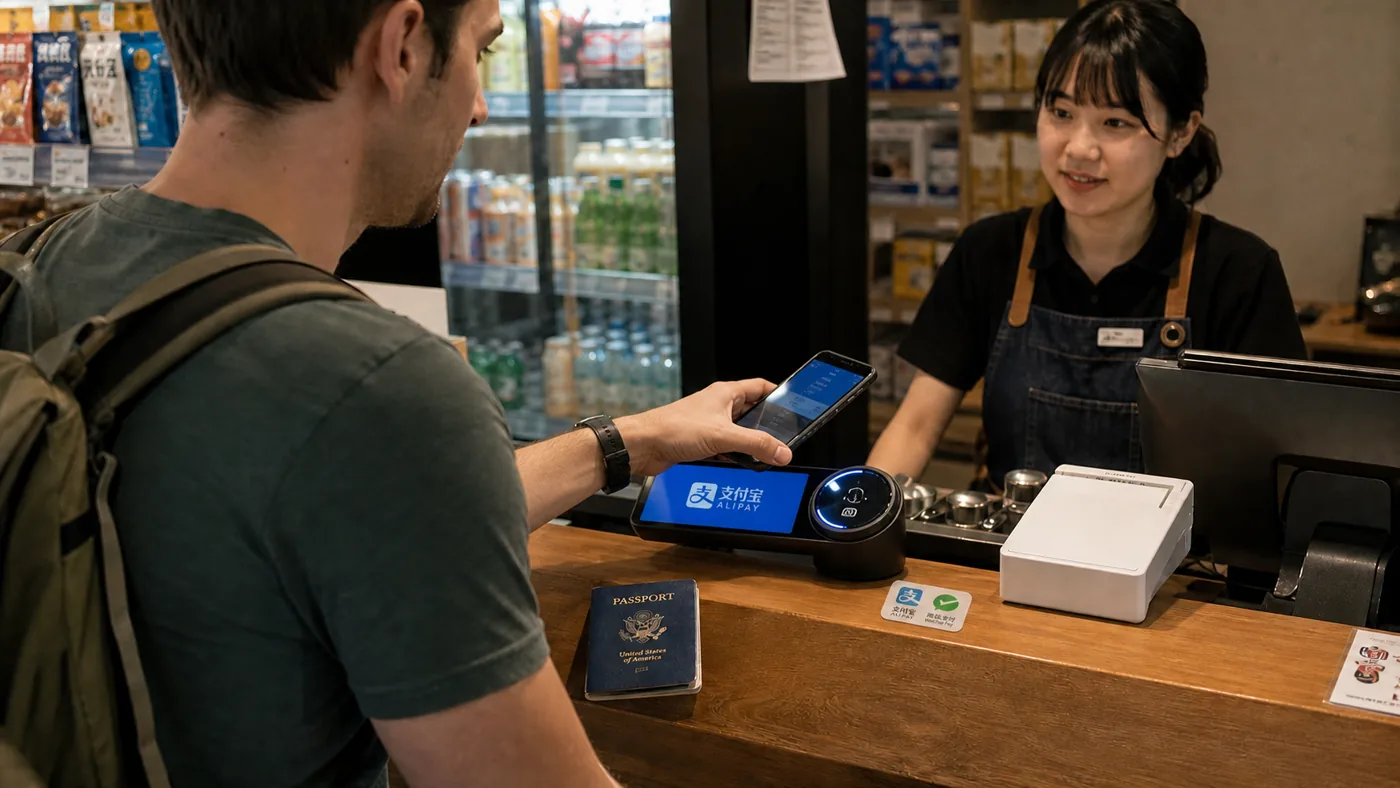
Local Lens recommendation: set up the official Alipay app first, add WeChat Pay if practical, then carry a physical card and a small amount of RMB cash as backups. When possible, choose a physical card from a different issuer or network from the card funding your wallet. Official 2026 guidance confirms that visitors can register Alipay, WeChat or UnionPay with a foreign phone number or Chinese mobile number and link supported international cards; card brands, limits and fees still vary by payment product.
| Method | Best role on your trip | Check before relying on it |
|---|---|---|
| Alipay | First mobile wallet for everyday QR payments and travel services | Identity checks, card-issuer approval, current fees and limits |
| WeChat Pay | Second wallet for merchant payments and WeChat-linked services | Wallet availability, verification, card and merchant support |
| International bank card | Backup at card-accepting merchants and supported ATMs | A different issuer or network reduces shared failure risk; check travel controls and fees |
| RMB cash | Backup when your phone, connection, app or card route fails | Carry smaller notes; change may not always be convenient |
- China government: 2025 mobile-payment guidance for foreign visitors
- Official 2025 Guide to Payment Services in China
Do you need a Chinese bank account?: No Chinese bank account is usually needed for a short visit. Use a supported international card in the official app, but keep an alternative until you complete a real payment in China.
Alipay is a common first mobile-wallet choice for international visitors. Prepare the account and linked a supported foreign bank card before departure, then use the dedicated setup guide for identity details, supported card networks, current fees, and limits.
With Alipay, you can pay for:
- Restaurants and cafés
- Shopping malls
- Convenience stores
- Taxis and ride-hailing services
- Metro transportation
- Attractions and tickets
- For most travelers visiting China, setting up Alipay before arrival is one of the most useful travel preparations.
In China, mobile payments are the dominant way to pay, and they generally fall into three types:
- QR Code Scan (扫一扫) – You scan the merchant's QR code and enter the amount to transfer money to them.
- Payment Code (付款码) – You display your payment QR code (or barcode) on your phone, and the merchant scans it to charge you.
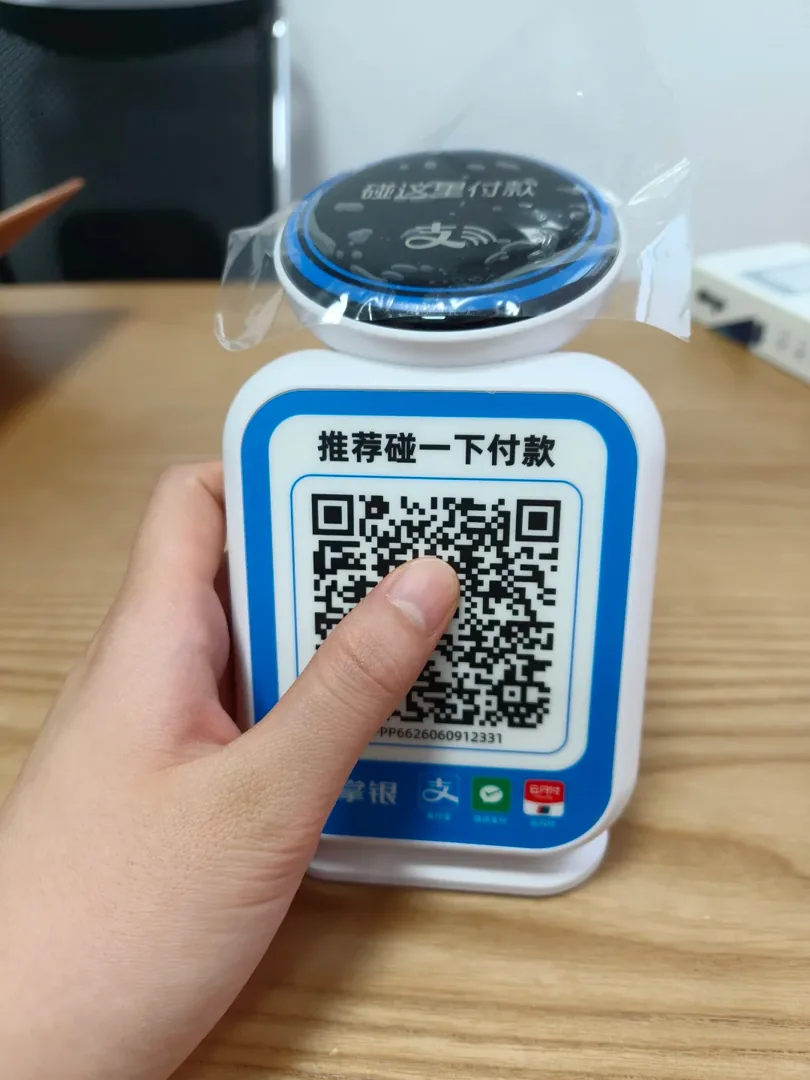
- Tap-to-Pay (碰一碰) – This is mainly promoted by Alipay and relies on NFC (Near Field Communication). With Tap-to-Pay, you don't even need to open the Alipay app – just unlock your phone and tap it against the merchant's dedicated receiver device. The payment is completed in a single step.
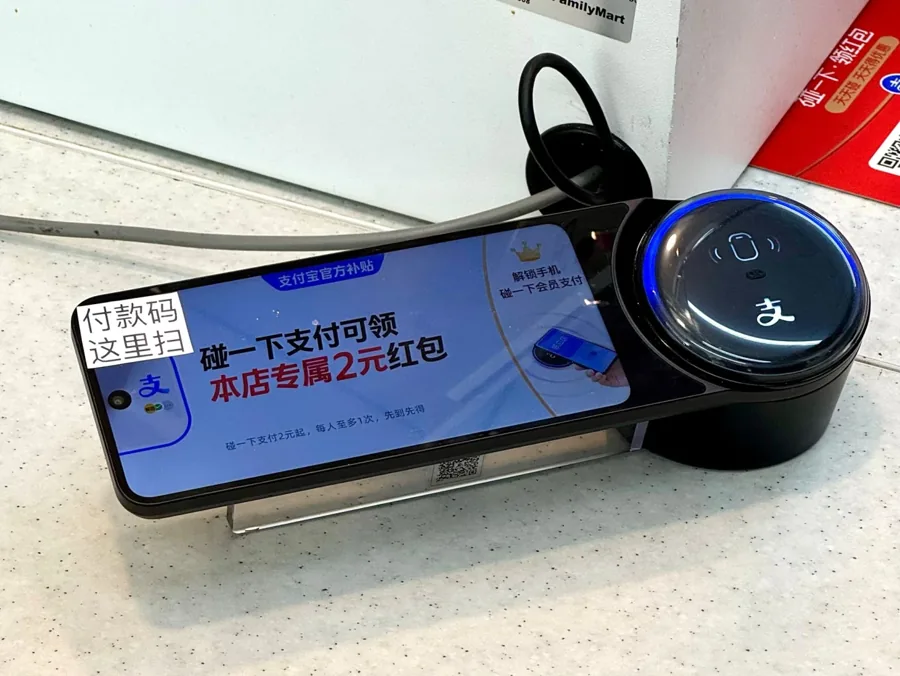
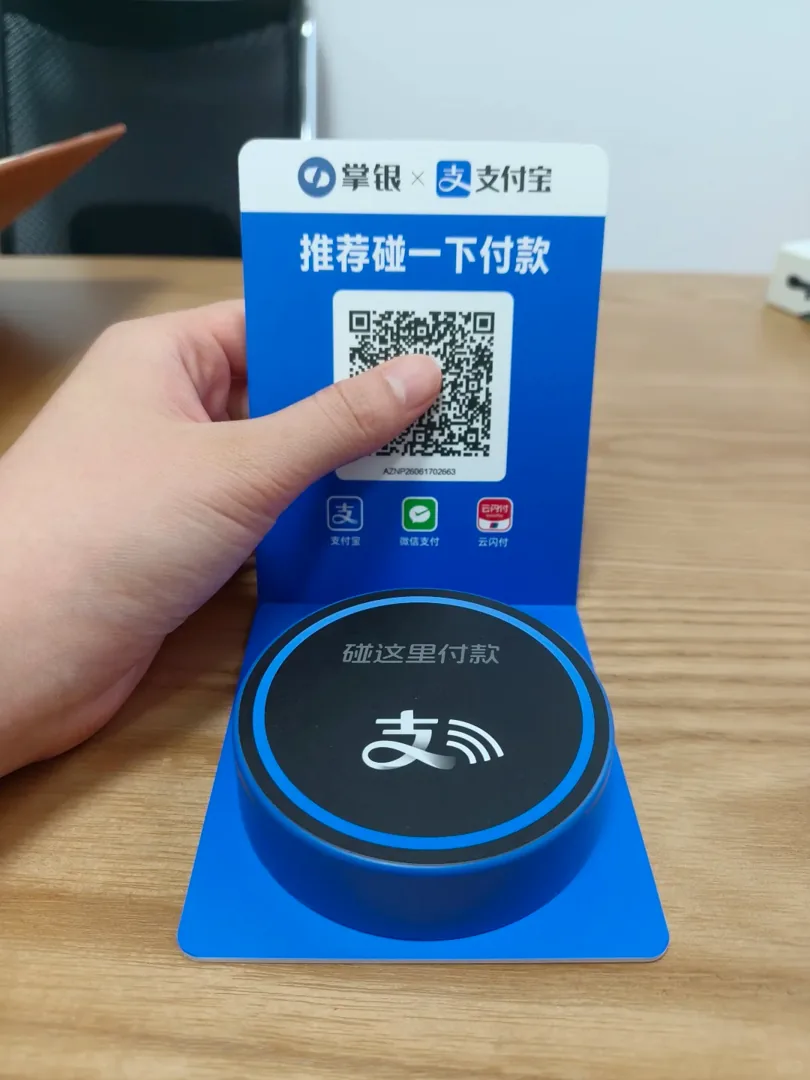
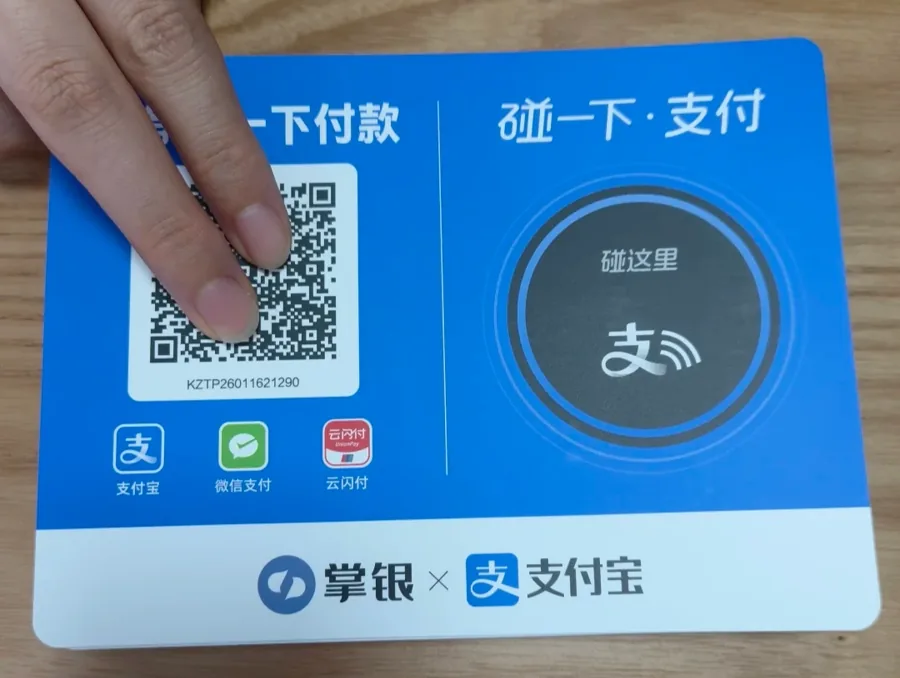
The following types of point‑of‑sale terminals support different payment methods:
- Figure 1: Supports Payment Code and Tap-to-Pay
- Figure 2: Supports QR Code Scan and Tap-to-Pay
- Figure 3: Supports QR Code Scan and Tap-to-Pay
- Figure 4: Supports QR Code Scan and Tap-to-Pay
(These devices vary in design, but they typically support the combination of methods listed above.)
WeChat combines messaging, social features and a digital wallet. International travelers can link a supported foreign bank card when their account is eligible.
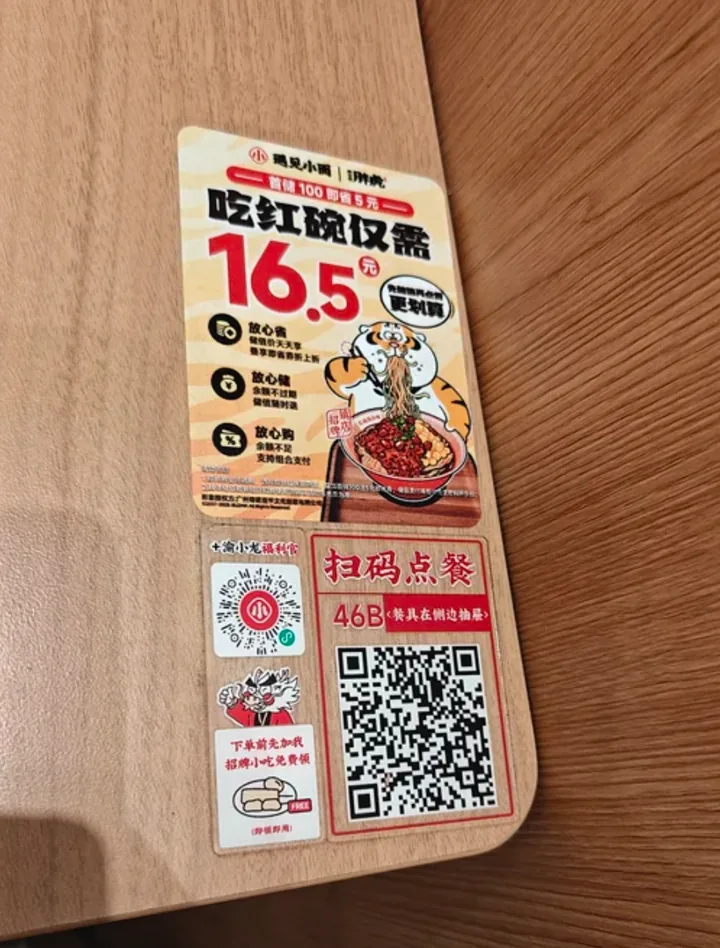
How to pay with WeChat Pay in China: for an ordinary merchant payment, scan the merchant’s official QR code or show the payment code in your wallet when the cashier asks. Confirm the merchant and amount in your own app; do not replace an unclear checkout with an unofficial request outside the merchant’s checkout.
Many local businesses accept WeChat Pay, especially:
- Small restaurants
- Local markets
- Independent shops
- Street vendors
- For a first trip, Alipay can be the primary wallet and WeChat Pay a useful second payment system. Keep a physical card and RMB cash outside both digital wallets.
Choose Alipay if you want:
- A payment-focused app with an intuitive interface
- Tourist-friendly features like booking attractions, transport, and hotels
- Clearer English menus and easier navigation
- A single app for most daily payments, ride-hailing, and travel needs
Choose WeChat Pay if you:
- Already use WeChat for messaging and want everything in one app
- Need to access mini-programs for local services (e.g., ordering food, buying tickets)
- Want a reliable backup when a merchant only supports WeChat
💡 Pro tip: Set up both apps before you travel. Some small shops may only support one platform, so having both gives you full coverage.
| Scenario | Best Option |
|---|---|
| Buying street food or at a night market | Alipay or WeChat (QR code scan) — cash also accepted |
| Taking a taxi or Didi ride | Alipay (integrated Didi mini-app) |
| Paying at a hotel or large mall | Credit card or mobile payment |
| Splitting a bill with Chinese friends | Cash (P2P transfer not available to foreigners) 💡 Pro tip: If you prefer not to use cash, check out this guide on cross-border transfers to and from China: Personal Cross‑Border Transfers to & From China (2026) — WeChat Pay / Alipay / Bank |
| Booking train tickets or attractions | Alipay (better tourist booking features) |
| Ordering food delivery | WeChat Pay (mini-program ecosystem) |
For most visitors, it‘s not an either/or choice – it’s a “set up both” strategy. When one wallet fails at a particular merchant, the other often works. If you only set up one, you‘re more likely to hit a dead end at small vendors.
If you’re pressed for time or can only manage one before your trip, Alipay is often recommended as the starting point – its interface is generally more tourist-friendly, and it offers a dedicated “Tour Pass” feature for short-term visitors. But you should still try to set up WeChat Pay as a backup when you have a moment.
Travelers sometimes search for Alipay to WeChat Pay transfers, hoping to move money from one wallet to the other. In practice, treat them as separate wallets – you can‘t directly transfer funds between the two apps. If a payment fails in one, simply switch to the other. Don’t rely on cross-app transfers during a short trip – the functionality isn‘t available.
💡 Pro tip: Both apps can scan the same merchant’s QR code in most cases – if you‘re not sure which one a vendor accepts, just open one app, scan the code, and see if it works. If it doesn’t, try the other.
Downloading the apps is only the first step. If payment does not work, check each part separately:
- Phone number: the wallet may accept an overseas number, while some local mini-programs require a mainland Chinese number.
- Identity verification: enter your name exactly as it appears in your passport.
- Card compatibility: a card can be linked successfully but still fail with a particular merchant or mini-program.
- Verification access: confirm that you can receive text messages and unlock the wallet while traveling.
Usually, no.
Most short-term international visitors do not need a Chinese bank account. You can generally link a supported international Visa or Mastercard to a mobile payment platform.
However, support varies by card issuer, merchant, service, and mini-program. Treat a linked card as prepared—not as a guarantee that every transaction will work.
Typically accepted at:
- Mid‑ to high‑end hotels
- Some tourist‑oriented restaurants
- Major department stores and luxury shops in big cities
Rarely accepted at:
- Small family‑run restaurants
- Street food stalls
- Local markets
- Taxis and small independent shops
So while cards are useful, they are not reliable as a sole payment method – especially outside major commercial areas.
Carry a physical bank card and a modest amount of RMB cash. Keep both Alipay and WeChat Pay available rather than relying on only one wallet.
- Mobile wallet: Alipay and WeChat Pay
- Physical card: a card you know works internationally
- Cash: a small amount of RMB for an unexpected failure
Some local transport mini-programs require a mainland Chinese phone number. A travel eSIM may provide data without giving you a number that the mini-program accepts.
If registration fails, use the station ticket machine or staffed service counter instead of repeatedly retrying the mini-program.
After arriving, make one small purchase near your hotel. Confirm that you can unlock the wallet, receive verification messages, and complete a real transaction before relying on it for a train connection or late-night ride.
- Open both wallets on mobile data or hotel Wi-Fi.
- Make a low-value payment at a staffed shop.
- If one method fails, identify whether the problem is the phone number, identity check, card, or merchant.
- Keep your fallback ready until one real payment succeeds.
Last reviewed:
Last updated:
A China-based planner reads every request.